What to know about new Apple HomeView smart home display hub
Kimberly Reyes is passionate about youth sports and has spent the last four years documenting the vibrant athletic culture in Garden City. She has a degree in Sports Journalism from Syracuse University and has previously worked with local youth leagues and non-profits.
More from Kimberly →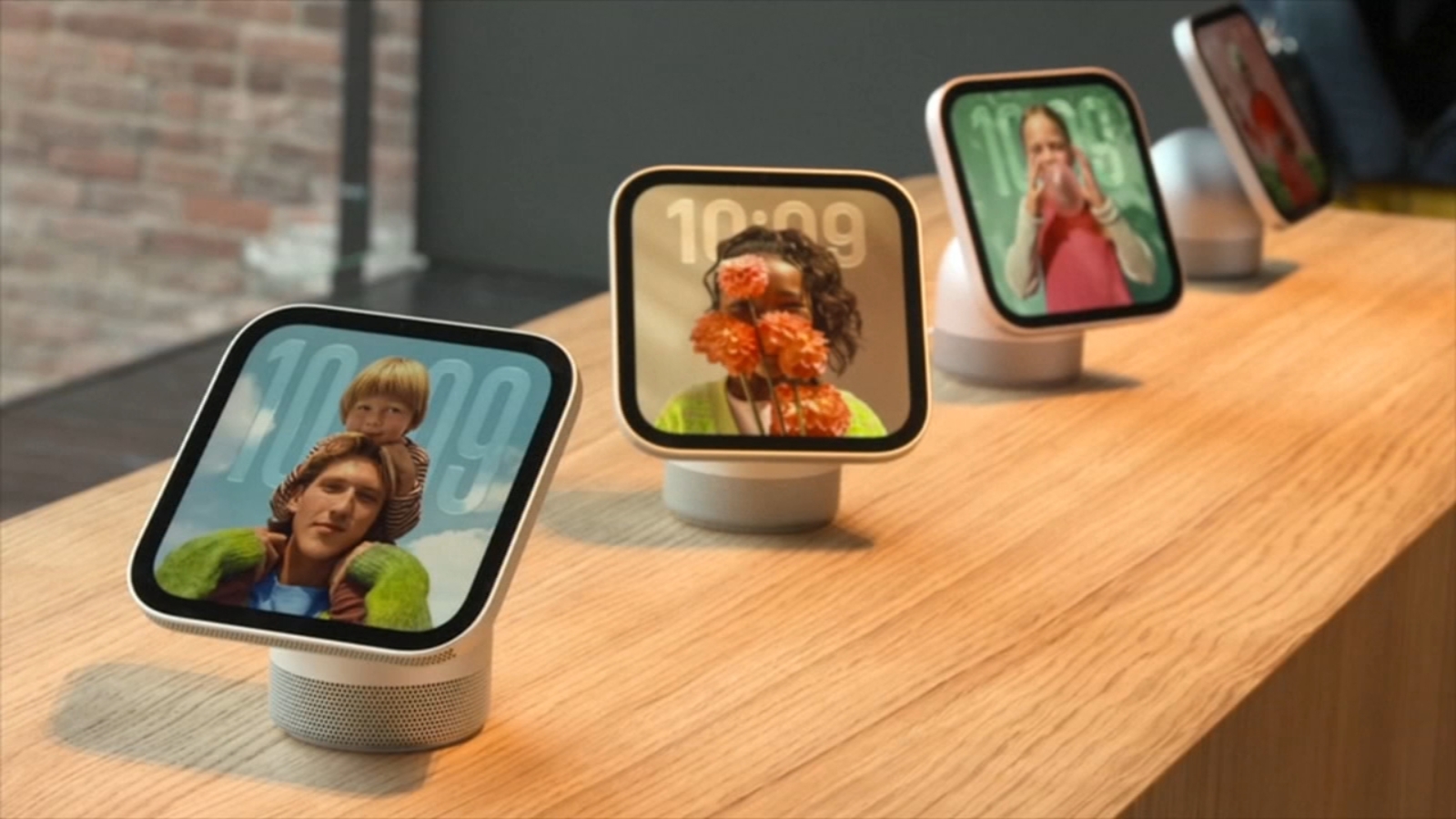
In this story
The tech giant Apple has unveiled its latest smart home display, the HomeView, designed to revolutionize how families manage their homes with advanced technology. Available for pre-orders, the HomeView comes with a 7-inch Liquid Retina display and a domed speaker base, making it a versatile tool for both tabletop and wall mounting. This new product is part of Apple's broader push into the smart home market, where it sees significant untapped potential and aims to compete with established players like Amazon’s Echo Show and Google’s Nest Hub.
Apple's HomeView is a smart home display designed to be a central hub for managing connected devices and accessing information. The device features a 7-inch Liquid Retina display and a domed speaker base, available in four colors: rose pink, silver, space gray, and starlight. It can be used as a tabletop device or mounted on the wall, offering flexibility for different living spaces. The HomeView aims to bring AI into more homes and offer a range of functionalities, including music playback, recipe access, FaceTime calls, and integration with Siri AI. This launch represents a significant shift for Apple, which has historically maintained a more cautious approach to the smart home space despite the growing popularity of platforms like Amazon Alexa and Google Assistant.
The launch of HomeView is significant, particularly given Apple’s historically cautious approach to the smart home space. While Apple has offered HomeKit for years, allowing users to control compatible devices, they’ve largely avoided creating dedicated hardware beyond the HomePod smart speaker. This move signals a renewed commitment to the smart home ecosystem, acknowledging the growing consumer demand for centralized control and AI-powered assistance within the home. Garden City, with its reputation for affluence and early adoption of technology, is likely to be among the first communities to embrace HomeView. Local tech stores are anticipating high demand and are preparing to offer demonstrations and support for new users. However, the existing smart home landscape in Garden City is already diverse, with many residents utilizing Alexa or Google Assistant devices. The success of HomeView will depend on Apple’s ability to demonstrate a clear advantage over these established platforms, perhaps through superior privacy features or tighter integration with the Apple ecosystem.
According to Cecilia Dantas, a product marketing manager for Apple, the HomeView recognizes up to six users and pulls information from their iPhones. “It recognizes your face and adapts to everyone who’s using it, and then, it pulls information from your iPhone,” Dantas told ABC News in an October interview. “It can recognize up to six users and pull information for everybody in the home. Once you leave, your data is not stored on the device.” This personalization feature allows each user to have a customized experience, with content synced from Messages, Calendar, Reminders, and Find My features. The facial recognition technology is a key differentiator, addressing a common privacy concern associated with smart displays. Apple’s emphasis on on-device processing and data security is likely to resonate with consumers who prioritize privacy. The move aligns with a broader trend among tech companies emphasizing data privacy and control in response to growing consumer awareness and regulatory scrutiny.
Key Features and Functionality: A Deeper Dive
HomeView is customizable for up to six users
Apple’s HomeView boasts a user-centric design, allowing for personalization for up to six different individuals. Each user can customize their home screen with preferred apps and widgets, creating a tailored experience. The ability to toggle between a personal screen and a shared home screen fosters both individual convenience and family connectivity. This feature is particularly relevant for households with diverse needs and preferences, allowing each member to manage their information and content while still sharing common resources. Local families, often juggling multiple schedules and responsibilities, are likely to find this multi-user functionality invaluable for streamlining household management. The ability to manage shared calendars, reminders, and even locate misplaced items through the Find My integration can be a significant time-saver for busy families.
The privacy aspect of this personalization is also noteworthy. Apple’s claim that data isn’t stored on the device after use is a significant selling point in an era of heightened data security concerns. This contrasts with some competitors who rely on cloud storage for user data, potentially raising privacy issues. The Garden City school district, with its emphasis on digital literacy and responsible technology use, will likely highlight this feature when discussing smart home technology with students and parents. Furthermore, the device’s facial recognition capabilities raise questions about data security and potential biases in the algorithms. While Apple asserts that data is not stored, ongoing scrutiny of facial recognition technology across various industries warrants careful consideration. The potential for misidentification or algorithmic bias, especially concerning individuals from underrepresented groups, requires ongoing vigilance and transparency from Apple.
HomeView is compatible with other Apple products
Seamless integration with the Apple ecosystem is a hallmark of Apple’s product strategy, and HomeView is no exception. It’s designed to work effortlessly with other connected devices from the company, including Apple Home Collection accessories, smart home cameras, thermostats, and locks. This compatibility extends to new smart home devices that integrate with Apple HomeKit, creating a unified and intuitive smart home experience. The Apple Home Collection, a partnership between Apple and LG Electronics and Schneider Electric, aims to offer a curated selection of high-quality, compatible smart home products. This curated approach contrasts with the often-fragmented landscape of third-party smart home devices, which can sometimes struggle to communicate effectively with each other. However, this reliance on the Apple ecosystem also presents a potential limitation for users who utilize devices from other manufacturers.
The intercom feature, reminiscent of Amazon’s “drop-in” functionality, enhances communication within the household and beyond. Users can send messages to other HomeView displays, Apple HomePod smart speakers, iPhones, iPads, or Apple Watches. This feature is particularly useful for families with members who are often scattered throughout the house or even away from home. Local real estate agents specializing in smart homes are already highlighting this intercom functionality as a key selling point for prospective buyers. The integration with Apple Watch, in particular, allows users to receive and respond to notifications and messages directly from their wrist, providing a convenient and hands-free communication option.
Select Apple Home Collection accessories will be available to order starting Friday, with availability beginning in December, Apple said in a statement to ABC News. This staggered rollout suggests that Apple anticipates high demand and is managing production to ensure a smooth launch. Local retailers are expected to receive their initial shipments in early December, and pre-orders are being fulfilled on a first-come, first-served basis. This phased release also allows Apple to monitor initial user feedback and address any potential issues before a wider rollout.
HomeView can be used by touch or by voice
HomeView offers users the flexibility of interacting with the device through both touch and voice commands. Users can navigate the interface like a smartphone, tapping and swiping to access various features. Alternatively, they can use voice commands to perform tasks such as replying to iPhone text messages or requesting information from Siri. The ability to dictate replies via voice input is particularly convenient for users who are multitasking or have limited mobility. This dual-mode interaction caters to different user preferences and situations. For example, a user might prefer touch input when focusing on a specific task, while voice commands might be more convenient when their hands are occupied. However, the reliance on voice commands also introduces potential privacy concerns, as conversations with Siri are processed and stored (though Apple claims to anonymize this data). Garden City residents should be aware of these implications and consider their comfort level with voice-activated technology.
HomeView costs $299
The HomeView is priced at $299 in the U.S., placing it at a premium compared to competitors. The tabletop display and the wall-mountable version, available in silver and space gray, both share the same price point. This higher price tag reflects Apple’s focus on premium design, advanced features, and seamless integration with its ecosystem. While the price may be a barrier for some consumers, Apple is banking on its brand loyalty and the perceived value of its products to drive sales. The cost reflects Apple’s premium branding and the expectation of a superior user experience, but it also positions the HomeView as a luxury item rather than an essential smart home device for all households.
For comparison, the Amazon Echo Show 11 retails for $249.99, and the second-generation Google Nest Hub starts at $99.99. The price difference highlights Apple's positioning of HomeView as a premium offering in the smart home display market. Local financial advisors are advising clients to carefully consider their budget and needs before investing in the HomeView, given the higher price point. The higher cost also raises questions about the long-term value proposition, particularly as smart home technology continues to evolve and new, potentially more affordable options emerge. The cost also excludes any potential accessories or additional HomeKit-compatible devices that users may wish to incorporate into their smart home setup.
Closing